
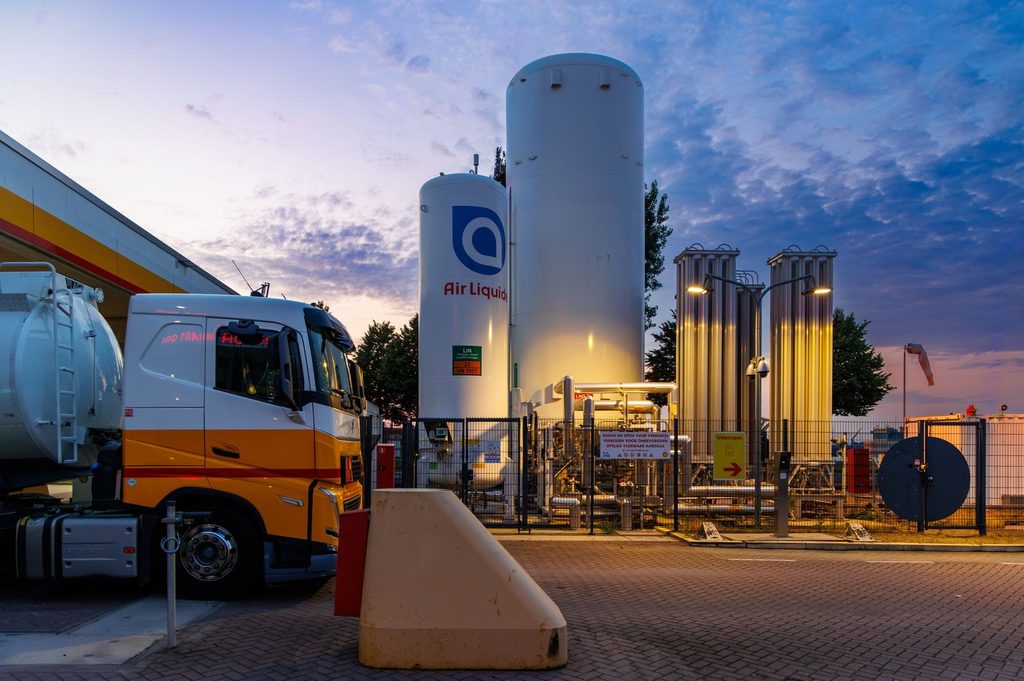
Transporting hydrogen at scale – whether via high-pressure gas pipelines, liquid carriers at cryogenic temperatures, or chemical vectors like synthetic ammonia — presents process engineers and logistics operators with unprecedented physical constraints. As the smallest and lightest molecule on the periodic table, hydrogen escapes through sealing materials and micro-porous structures that easily contain natural gas, propane, or crude oil. Combined with its wide flammability limits in air (4% to 75% by volume), low ignition energy, and propensity to induce atomic-level embrittlement in conventional metals, transporting this clean energy vector demands an uncompromising approach to measurement accuracy, materials science, and functional safety across every mile of transport infrastructure.
The Extreme Physical Realities of Gas Compression and Cryogenic Liquefaction
When moving hydrogen in gaseous form through transmission networks, operating pressures regularly exceed 700 bar (10,000 psi) at compressor stations and fueling terminals. Under these severe pressures, real-gas behavior diverges significantly from ideal gas laws, causing unpredictable density shifts and rapid temperature changes during compression and expansion cycles. Conversely, transporting hydrogen as a liquid (LH2) requires cooling the gas down to cryogenic temperatures below -253°C (20 K). At this state, even minute thermal bridge inputs lead to boil-off gas (BOG) losses, creating transient two-phase flow conditions that destabilize conventional flowmeters.
In both operating regimes, accurate inline measurement is not merely a billing requirement for custody transfer; it is a fundamental pillar of process safety. Inaccurate pressure monitoring in pipeline networks increases the risk of structural fatigue and cyclic mechanical stress, while undetected flow variations between compressor stations can mask fugitive emissions or micro-leaks along underground distribution lines.
Critical Engineering Challenges in Hydrogen Distribution Networks
- Atomic Permeation and Metal Embrittlement: Single hydrogen atoms penetrate the crystalline lattice of metals. In standard sensor diaphragms, this causes severe hydrogen embrittlement, baseline drift, diaphragm blistering, and premature mechanical failure.
- Transient Cryogenic Thermal Cycling: Liquid hydrogen transport exposes piping, valves, and inline instrumentation to extreme cold. Sensor housings and electronics must endure intense thermal shock during cool-down and warm-up cycles without losing seal integrity.
- Custody Transfer and Density Variations: Mass flow measurement during ship-to-shore offloading or pipeline fiscal metering must remain pinpoint accurate under rapidly fluctuating pressure, temperature, and gas composition profiles.
Field-Proven Instrumentation from Endress+Hauser
Managing these harsh process conditions requires instrumentation engineered from the ground up specifically for hydrogen service. As a global leader in process automation and measurement technology, Endress+Hauser supplies dedicated field instruments designed to withstand high pressure, prevent embrittlement, and deliver reliable diagnostic data under extreme conditions.
Their specialized portfolio includes Coriolis mass flowmeters built with advanced, highly resistant alloy tubing (such as Hastelloy C-22) that offer direct mass flow and density measurement without the need for secondary pressure or temperature compensation. For high-pressure gas applications, Endress+Hauser provides pressure and differential pressure transmitters equipped with proprietary gold-coated metal membranes. The gold barrier effectively halts hydrogen diffusion into the internal measuring cell, preventing sensor drift and extending operational lifespan. By providing SIL2/SIL3-rated safety systems, TÜV certifications, and explosion-proof (Ex d / Ex i) designs tailored to real-world pipeline and terminal environments, Endress+Hauser ensures that every step of transportation of hydrogen remains secure, traceable, and compliant with evolving international safety standards.
Building a Scalable and Safe Hydrogen Economy
Building a resilient hydrogen infrastructure relies on midstream assets that plant managers and pipeline operators can trust implicitly. Replacing guesswork and manual sampling with precise, real-time inline measurement protects high-value capital equipment, eliminates fugitive emissions, and guarantees safe delivery from green and blue production facilities to heavy-duty mobility hubs and industrial consumers.