
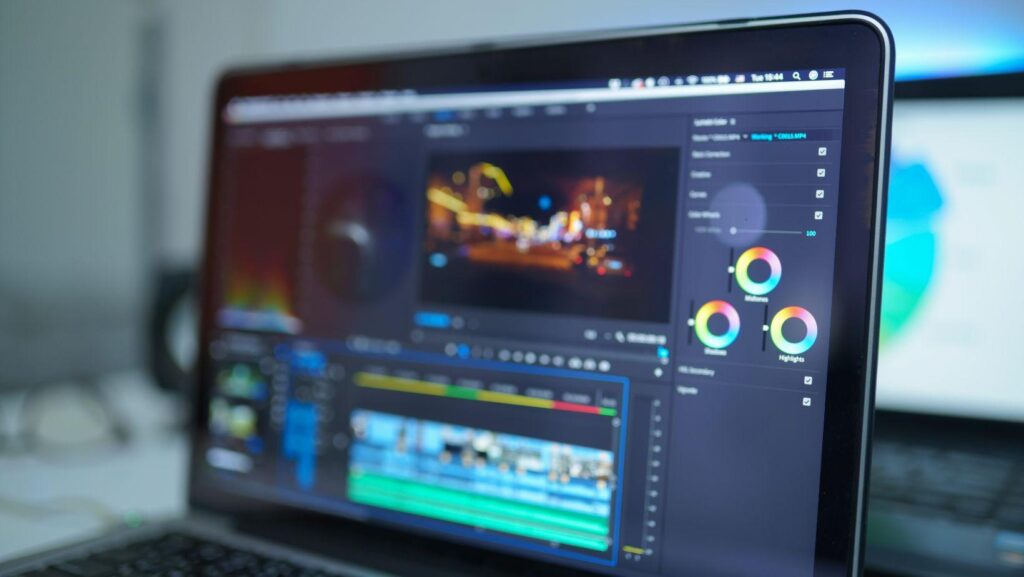
Video production has traditionally involved a long chain of separate tasks: developing an idea, writing a script, planning shots, recording footage, editing clips, adding captions, choosing music, and preparing the final file for different platforms. Artificial intelligence is changing that workflow, but perhaps not in the way some headlines suggest.
The most useful role of AI is often not replacing the editor. Instead, it helps remove repetitive work and makes the planning stage more organized. A creator can use conversational AI to turn a rough idea into a script, break that script into scenes, suggest visual directions, develop captions, or identify places where a video could lose the viewer’s attention.
This distinction matters because a conversational AI assistant and a dedicated video editor solve different problems. Current ChatGPT can be particularly useful for the language and planning side of production, while a video-editing application remains responsible for working with timelines, footage, transitions, sound, effects, and final exports.
From Blank Page to Video Plan
One of the hardest parts of video production is sometimes the first five minutes.
A creator may know the subject but have no clear idea how to turn it into a coherent video. Instead of immediately opening an editing program, they can describe the concept to an AI assistant and ask for a practical production plan.
For example, someone making a five-minute educational video could provide the subject, intended audience, tone, and approximate length. The AI could then suggest an opening hook, a logical sequence of sections, narration, visual suggestions, and a closing message.
That does not mean the generated script should be accepted without review. Human judgment remains important. An AI-generated outline may be technically coherent but fail to reflect the creator’s personality, contain unnecessary information, or make claims that need verification.
The better approach is to treat AI as a brainstorming partner rather than an automatic replacement for creative judgment.
Where a ChatGPT Video Editing Tool Fits
The phrase ChatGPT video editing tool can describe a broader workflow in which conversational AI helps creators communicate what they want to achieve rather than manually figuring out every step from scratch.
Imagine an editor working on an interview. Instead of starting with a blank timeline, they might first ask AI to organize the transcript into themes, identify potential sections for a shorter version, suggest title ideas, and write captions.
The actual cutting can then happen in dedicated editing software.
This approach is becoming increasingly practical across the industry. Recent developments show AI being connected to editing workflows where natural-language instructions can help with tasks such as finding material, cutting footage, mixing audio, adding captions, applying corrections, and preparing content for different formats.
The important idea is not that one application has to perform every task. AI can act as an intelligent layer between the creator’s intention and the software used to execute it.
AI Can Make Editing More Structured
Video editing often becomes difficult because there are too many decisions.
Which clips belong together? Which section should be shortened? Where should a title appear? What should be used for a thumbnail? Which parts of a long interview are suitable for short-form content?
AI can help turn these open-ended questions into manageable decisions.
For instance, a creator could provide a transcript and ask for:
The creator can then choose what is actually useful.
This is particularly valuable for people who produce content regularly. Saving ten minutes on one video may seem insignificant, but reducing repetitive planning work across dozens of videos can make a meaningful difference.
The Rise of Conversational Editing
Traditional editing interfaces are powerful, but they also require users to understand their controls. Timelines, tracks, keyframes, codecs, frame rates, color tools, audio mixers, masks, and effects provide enormous flexibility, but they can be intimidating to newcomers.
Conversational interfaces offer another way to approach the same problems.
Rather than searching through menus, a user could eventually describe an intended result in ordinary language: shorten a section, create a vertical version, emphasize a particular moment, or prepare captions.
The technology is moving in this direction, although the capabilities available today should not be confused with a fully autonomous editing studio. As of 2026, ChatGPT itself should not be treated as a conventional timeline-based editor that can independently open raw footage and export a finished video.
That limitation is actually useful to understand. It encourages creators to build realistic workflows instead of expecting a single prompt to produce a polished production from beginning to end.
AI Does Not Remove the Need for an Editor
There is a temptation to think that automation will make editing unnecessary. In practice, good video editing involves many subjective decisions that are difficult to reduce to simple instructions.
An editor understands pacing. They can recognize when a pause makes an interview feel natural rather than slow. They know when background music is distracting, when a cut feels abrupt, or when a visually impressive effect does not serve the story.
AI can recommend options, but the creator still needs to decide which option works.
This is especially important for commercial, educational, documentary, and social content where context matters. A technically clean video can still be boring, misleading, or emotionally ineffective.
The strongest workflow therefore combines machine assistance with human review.
What About AI Video Generation?
Video generation and video editing are related but different technologies.
Generation creates new visual material from instructions, while editing modifies or organizes existing material. AI systems have increasingly blurred that distinction by supporting text-to-video, image-to-video, automated editing, and other forms of synthetic media.
However, the market changes quickly. OpenAI’s Sora, for example, was previously associated with AI video generation, but OpenAI states that its Sora product was discontinued on April 26, 2026.
That is a useful reminder for anyone researching AI video tools: product capabilities and availability can change rapidly. Articles, tutorials, and workflows should therefore be checked against current documentation rather than relying on older descriptions.
A More Practical AI Video Workflow
For many creators, a sensible AI-assisted process looks something like this:
Start with the idea. Define the purpose of the video and the person watching it.
Develop the structure. Use AI to explore hooks, sections, talking points, and possible storylines.
Write or refine the script. Make the language sound natural and appropriate for the intended audience.
Build a shot plan. Match important statements with footage, graphics, screenshots, animations, or other visual material.
Record or collect the material. Gather the actual footage rather than expecting AI to solve every production problem.
Edit with dedicated software. Assemble clips, adjust timing, clean audio, add graphics, and make creative decisions.
Use AI for repetitive tasks. Depending on the software, this might include transcription, captions, organization, reframing, or other workflow assistance.
Review manually. Check factual accuracy, pacing, sound, visual consistency, and overall quality before publishing.
This division of responsibilities makes more sense than trying to force every part of production into one application.
The Future Is More Collaborative Than Automatic
The most interesting development in AI video editing may not be the arrival of a tool that produces an entire finished video from one sentence. It may be the gradual disappearance of small barriers between an idea and its execution.
Creators already use AI for scripting, research, storyboarding, captions, prompts, and other supporting tasks. Dedicated editing platforms are increasingly adding AI features that interact with the actual production process.
Over time, these systems may become better at understanding context, preserving creative intent, and carrying out multi-step workflows. But human direction will remain valuable because video is ultimately a communication medium, not simply a collection of technical operations.
The practical lesson for creators is straightforward: AI works best when it reduces friction without taking away judgment. Use conversational AI to clarify ideas and organize the work, use specialized software to handle the detailed edit, and keep a human involved wherever taste, context, accuracy, or storytelling matters.
That combination can make video production faster while still allowing the finished work to feel intentional and genuinely human.